

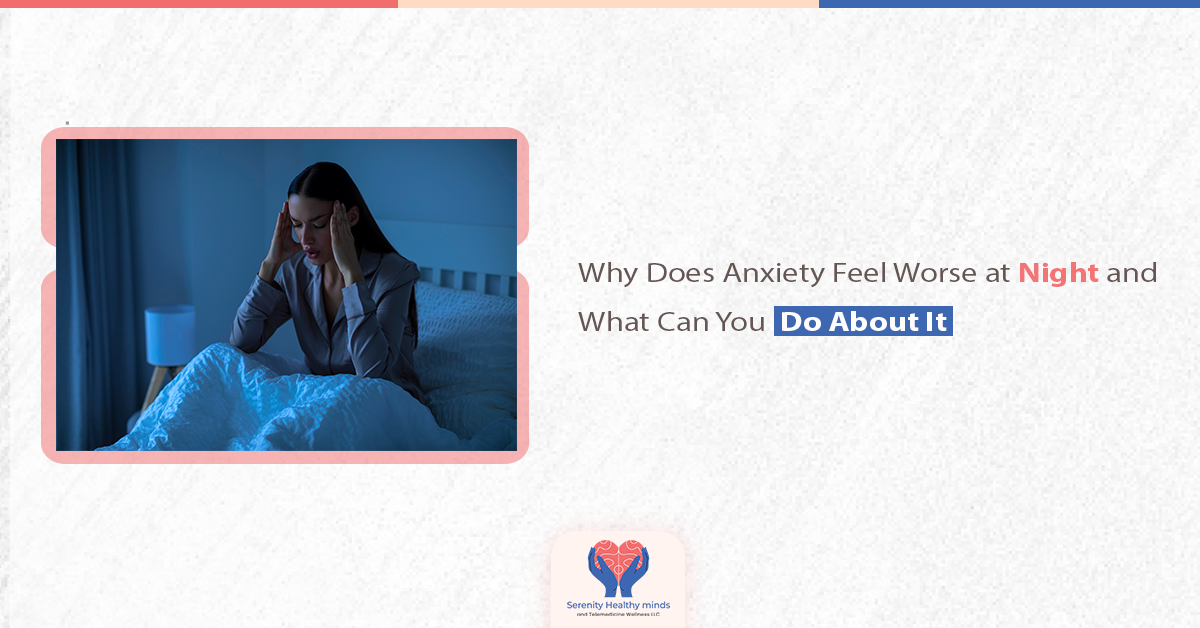
Any person with anxiety will tell you that the worst time of day is at night. There is something about lying in bed that makes all the worries feel heavier and more difficult to get rid of.
This does occur due to certain reasons and not merely due to bad luck.
Reduced Environmental Stimulation
During the day, you’re busy. Work distracts one side, your phone the other, and people need things from you. Your anxious thoughts exist, but they’re competing with everything else.
Night eliminates all of that competition. You are lying in bed, the room is dark, and nothing requires your personal attention.
All those things you were half-ignoring all day? They are all that is left to concentrate on.
It is not that the problems have become larger. You just stopped being distracted from them.
The Biology of Nighttime Anxiety
It is normal that cortisol levels decrease at night. With some, however, that hormonal change causes anxiety rather than relaxation.
When lying down, also, you are more aware of your body. Your heart beating, the rhythm of your breathing, and small muscle twitches.
You would never enroll these in the daytime.
At night, in silence, they can feel alarming. Your brain will begin to question whether something is wrong, and this is what causes actual anxiety.
Tired Brains Work Differently
By nighttime, your brain is worn out. The part that usually helps you think clearly and manage emotions has been working all day. When it’s exhausted, everything feels harder to handle.
An issue that appeared easy to solve in the morning will appear impossible at night. Not that it changed, but because you are too tired to reflect on it in a proper way.
And then there’s the extra layer: worrying about sleep itself. You know you need rest. You’re not getting it. Now you’re anxious about being anxious, which keeps you awake longer.
What Helps
Give Your Brain a Shutdown Period
Don’t go from full speed to trying to sleep. Take an hour to slow down first.
- Turn off bright lights
- Turn your phone off
- Read something, take a shower, stretch, anything calm
- Do the same things in the same order each night
Your brain learns these patterns. Teach it that these actions mean sleep is coming.
Get Thoughts Out of Your Head
Put a notebook by your bed. When your mind starts racing, write it down. It does not matter how it looks or whether it is making sense. Just get it on paper.
This tells your brain “I’ve got this recorded, we can deal with it tomorrow.” At times that is sufficient to cause it to cease in the loop.
Basic Techniques
When anxiety kicks in:
- Name things around you. These can be the five you see, four you hear, three you can touch. Keeps you present instead of spiraling.
- Breathe slowly. Four seconds in and then four seconds out.
- Tense your muscles then release them, working from your feet up. It gives your body something to do besides panic.
Fix What You Can During the Day
If you drink coffee after 2 PM, then avoid that. It stays in your system way longer than you think.
Screens mess with your sleep. The light tricks your brain into staying alert. Put them away an hour before bed if you can.
Talk to Someone
If this happens a few times, fine. If it’s happening regularly and messing up your days, that’s different. You probably need professional support.
Get Support
At Serenity Health, we treat people dealing with anxiety that won’t let up at night. We figure out what’s actually happening with you and what might help.
You can sleep better. It just takes the right approach.
Schedule with Serenity Health if you want to talk about treatment options.
FAQ
Why does my anxiety come at night?
It probably doesn’t. It’s just easier to ignore during the day when you’re busy. The night eliminates the distractions, thus you feel it more.
Will this go away on its own?
Sometimes. However, when it has been occurring weeks or months, it is not likely to fix itself without any intervention of some form.
What’s the fastest way to feel better?
Depends on what’s causing it. Sleep hygiene changes can help quickly. Professional treatment takes longer but addresses the underlying issue instead of just managing symptoms.
