

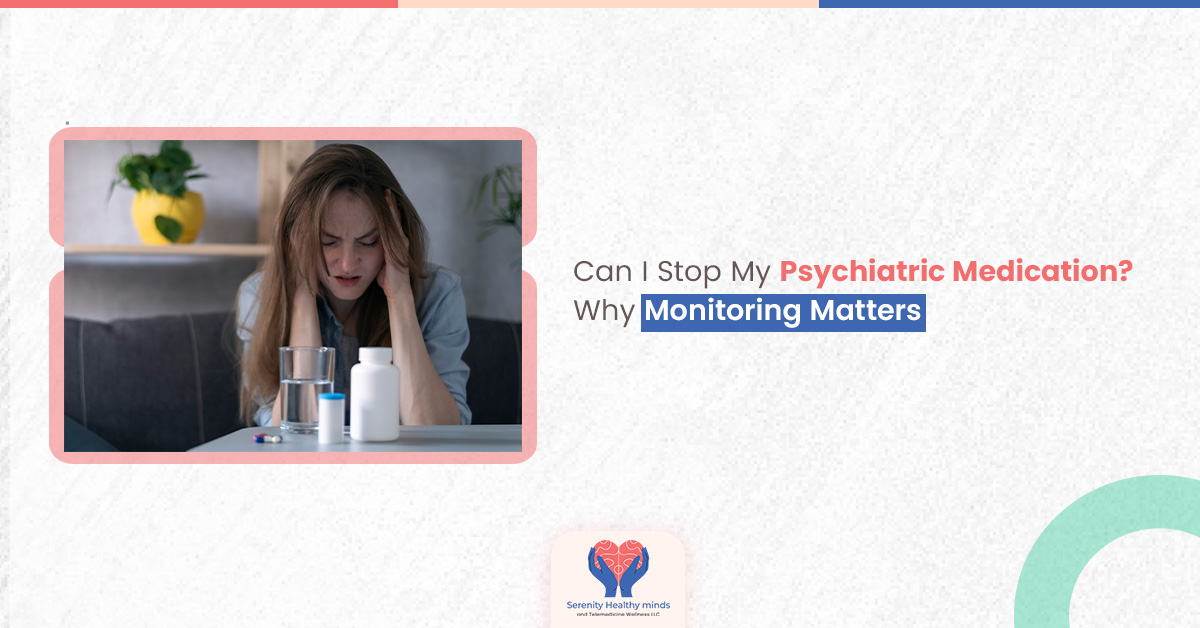
Feeling better on your medication? That’s great. Yet it leads to another question that is usually asked: Can I stop taking this now?
When everything is going well, it is easy to believe that you no longer need it. The solution, however, is not that easy.
Cessation of psychiatric medication must be done cautiously, with appropriate assistance.
What Happens If You Stop Too Fast
The body becomes accustomed to medicine. When you come to a halt abruptly, everything may get out of hand.
You might experience:
- Withdrawal symptoms that feel awful
- Your original symptoms are coming back
- Physical stuff like headaches or nausea
- Mood swings you weren’t expecting
Certain drugs are more difficult to withdraw from than others. Antidepressants, such as may produce so-called discontinuation syndrome
Finding Psychiatric Medication Management Near Me
You need someone qualified to guide this process.
That means finding psychiatric medication management services with providers who can prescribe psychiatric medications.
Can a psychiatric mental health nurse practitioner prescribe medication? Yes. They can.
Psychiatric nurse practitioners are specialists who are trained to prescribe and administer drugs.
They are a suitable choice in case you are seeking psychiatric medication management.
A good provider will:
- Actually listen to why you want to stop
- Look at your full history
- Make a plan based on your situation
- Check in regularly to see how you’re doing
Who Can Prescribe Psychiatric Medication?
The following professionals can prescribe medications:
- Psychiatric mental health nurse practitioners – PMHNPs or Psychiatric NPs
- Psychiatrists
- PCPs
How Medication Management Actually Works
Real medication management isn’t just refilling prescriptions. It’s ongoing.
You need regular maintenance check-ins.
Especially when things are changing. Starting something new, adjusting doses, or thinking about stopping. These all need attention.
Your provider should be tracking how you’re doing and catching issues before they get bigger.
Everyone’s different.
There’s no standard timeline for everyone. Your provider should think about:
- How long you’ve been taking the medication
- What condition you’re treating
- Whether you’ve tried stopping before
- What else is going on in your life
- Your family history with mental health
Tapering does take time.
If you’re going to stop, it needs to happen slowly. Your provider will reduce your dose bit by bit over weeks or months. This helps your body adjust without shocking your system.
Signs It Might Be Worth Discussing
There are times when stopping medication makes sense:
- You’ve been stable for a long time
- You’re managing well with therapy
- Life circumstances have changed for the better
- Side effects are becoming a problem
But here’s the catch: sometimes the reason you feel stable is because of the medication. That’s why you can’t make this call on your own.
Getting Support That Makes Sense
Treatment of mental health must be accommodating to your life and not the other way around.
It helps to have an expert who understands what they are doing, whether you are considering quitting drug use or simply seeking more effective management of your current medication use.
We currently provide our psychiatric medication management services via telehealth at Serenity Healthy Minds and Telemedicine Wellness LLC.
You can talk to an expert psychiatric medication management provider from your home.
We will talk about your worries and consider your choices, and determine what suits you.
Book an appointment to talk through your medication questions with someone who can help.
FAQs
How long does it take to stop medication safely?
Normally, weeks to months, depending on what you’re taking. Your provider will develop a schedule that is appropriate for your situation.
Will my symptoms return if I stop?
They might. That is the reason you need monitoring and a contingency plan in case things go bad.
I’m feeling better. Can I stop now?
Not necessarily. Feeling better may also mean the medication is working. Consult your provider before making changes.
I already stopped on my own. What now?
Call your provider. Either you resume treatment or move ahead cautiously, they will assist you in determining the next course of action.
